The Program

Guided medical observation, with academic structure.

A structured, observation-only shadowing experience in Buenos Aires — built around clinical insight, reflection and ethical boundaries.

Program Overview

A structured experience for meaningful clinical exposure.

LATIDOS is a structured, observation-only medical shadowing experience designed for international pre-med students seeking meaningful clinical exposure in a global context. Students observe physicians in real hospital environments in Buenos Aires, gaining insight into clinical reasoning, patient communication and healthcare systems — without participating in patient care.

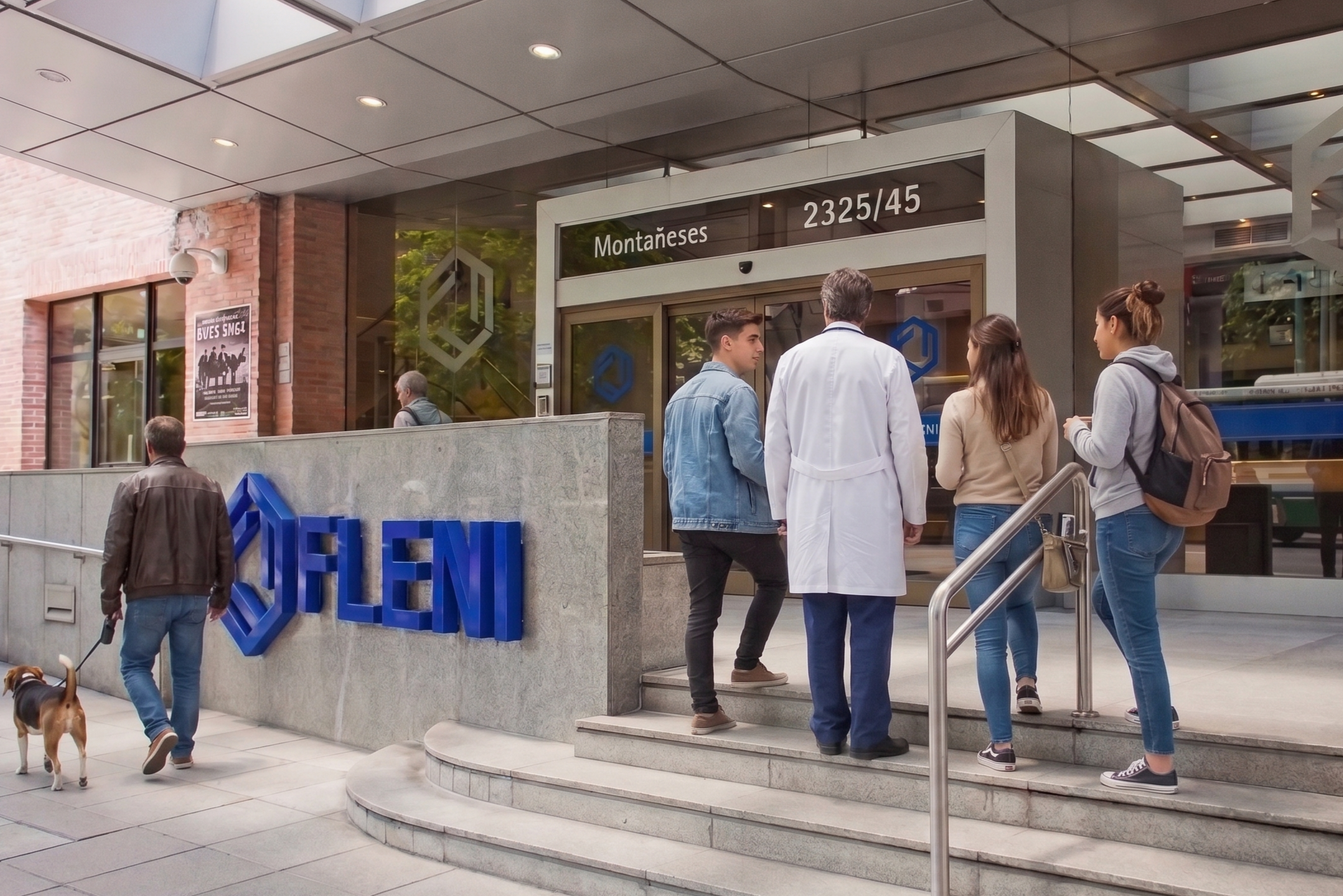
Students walking together toward a teaching hospital entrance in Buenos Aires — daytime, lanyards/notebooks, sense of arrival and purpose.
Rotations & Areas · What You’ll Observe

Understanding how physicians think, listen, and make decisions.

Students gain exposure across a range of clinical and systemic dimensions. The focus is not on procedures, but on reasoning, communication, and context.

Effective physician–patient communication

Clinical reasoning and diagnostic thinking

Ethical considerations in medical practice

Interdisciplinary teamwork in healthcare

Differences between public and private healthcare settings

Preventive medicine and public health dynamics

Duration & Structure

A flexible structure with a clear weekly rhythm.

LATIDOS is designed to balance hospital observation, guided reflection and local immersion. The structure gives students enough clarity to plan ahead while keeping room for cohort-specific schedules and rotation availability.

4 weeks

Flexible short-term options designed to fit winter or summer academic schedules.

25 hours/week

A balanced weekly rhythm combining clinical observation, learning time and city immersion.

Small cohorts

Groups are limited to preserve meaningful supervision and coordination.

A Typical Week

Each week combines hospital observation with guided reflection and cultural immersion. Students attend scheduled hospital observation sessions, shadow physicians during consultations and rounds, observe interdisciplinary collaboration, participate in structured reflection sessions and engage in cultural experiences within the city. Observation hours are part-time, allowing space for processing, academic reflection and personal exploration of Buenos Aires. Cohorts remain intentionally small to ensure meaningful learning and supervision.

Sample Schedule

How student groups may rotate across observation areas.

This example shows one possible way to organize student groups across different hospital areas. Final rotations depend on hospital availability, cohort size and the confirmed program calendar.

Rotation Slot Group A Group B Group C Group D
Rotation 1 Physiatry Diagnostics Emergency Neurology
Rotation 2 Diagnostics Emergency Neurology Physiatry
Rotation 3 Emergency Neurology Physiatry Diagnostics
Rotation 4 Neurology Physiatry Diagnostics Emergency

Rotation timing

The slots are shown as a reference and may not represent full weeks. Some areas may change day by day.

Observation areas

The areas shown are examples only. Additional observation areas may be available depending on hospital availability.

Clinical boundaries

Students never enter operating. All rotations are observation-only, with no procedures or patient care.

The first and last program days are generally reserved for hospital induction, orientation, reflection and closing activities.

Fees & Dates

An academically grounded program — not a tourism experience.

Program fees reflect institutional coordination, ethical supervision, structured academic framing, small cohort design, and local support and preparation. The focus is quality, clarity and responsibility.

What’s Included

Everything included in your fee

Curated hospital observation placement
Academic program design
Pre-departure orientation
Hospital induction
Local coordination and student support
Final certificate of completion
Program description for applications
Optional letter of recommendation
Alumni network access

Program Format

LATIDOS follows a 4-week cohort model designed to give students a clear, supported and academically meaningful experience in Buenos Aires.

Part-time hospital shadowing
Structured learning and preparation
Space to explore the city beyond the hospital

Group size is limited to preserve quality, supervision and local coordination.

What’s Not Included

Some personal and travel-related expenses are not included in the program fee. Students should plan separately for:

Airfare
Meals
International health insurance (required)
Personal expenses

Transparency ensures students and families can plan confidently.

Payment & Enrollment

Enrollment is confirmed upon:

1Completed application
2Acceptance notification
3Program deposit

Once enrolled, students receive next steps, preparation materials and guidance from the LATIDOS team.

Detailed pricing and available dates are shared upon request to ensure personalized guidance.

Housing & Spanish

Students may:

Arrange housing independently
Request LATIDOS assistance coordinating an accommodation

Optional Spanish classes are organized by LATIDOS for students who wish to enhance their immersion and communication skills. Cultural activities and local experiences are also coordinated to support integration into daily life.

Visas & Entry Requirements

Most U.S. students enter Argentina as tourists for short-term academic observation. LATIDOS provides:

Guidance on entry requirements
Supporting documentation
Clear communication about observer status

Students are responsible for complying with entry regulations.

Ready to learn more about availability and pricing?

Share a few details and our team will follow up with pricing, dates and personalized guidance.

Academics & Safety

Structured, ethical, and supervised.

LATIDOS is built around one central principle: responsible clinical observation with ethical boundaries. The program is designed to provide meaningful clinical exposure while maintaining strict privacy standards, patient dignity, and academic integrity.

Students observe. They do not participate in patient care.

Clear Policy

Participants maintain a non-participatory role within clinical settings. Students:

Do not provide medical care
Do not perform procedures
Do not access medical records
Do not make clinical decisions

Their role is strictly observational, aligned with ethical standards and local regulations. Clear expectations are communicated before arrival and reinforced during hospital induction.

Confidentiality & Conduct

All students:

Sign confidentiality agreements
Complete a pre-arrival ethics orientation
Follow hospital-specific privacy protocols
Adhere to professional dress and conduct standards

Respect for patient privacy and dignity is non-negotiable. LATIDOS emphasizes that clinical exposure is a privilege that requires maturity and responsibility.

Insurance & Liability

Participants are required to obtain international health insurance coverage valid in Argentina. LATIDOS provides:

Program documentation for insurance purposes
Liability waivers outlining program boundaries
Clear communication regarding observer status

Students and families receive transparent information before enrollment.

Local Support & Emergency Protocols

From pre-departure preparation to 24/7 on-site coordination, students are never left without a point of contact:

Pre-arrival ethics and cultural orientation
Designated local coordinator & hospital induction
Clear protocols for medical or logistical emergencies
Ongoing guidance to navigate the city confidently

The goal is to combine structured supervision with confident independence.

For Families

Trust, by design.

LATIDOS understands that sending a student abroad for a medical program requires trust. The program is designed to offer:

Academic seriousness Ethical clarity Defined supervision Transparent communication
Why Argentina

A legacy of science and empathy.

Argentina has a long-standing tradition of academic medicine, scientific research and public health leadership in Latin America.
For generations, physicians trained here have combined rigorous clinical reasoning with a strong humanistic approach to patient care.
Medicine in Argentina is not only technical — it is deeply relational and socially grounded.

Academic Excellence

Universidad de Buenos Aires

Founded in 1821, UBA is recognized across Latin America for academic rigor and demanding clinical training. Its School of Medicine has shaped generations of physicians known for strong diagnostic reasoning and ethical grounding.

Bernardo Houssay
Luis Federico Leloir
César Milstein

This legacy reflects a culture that values critical thinking, scientific discipline and intellectual independence.

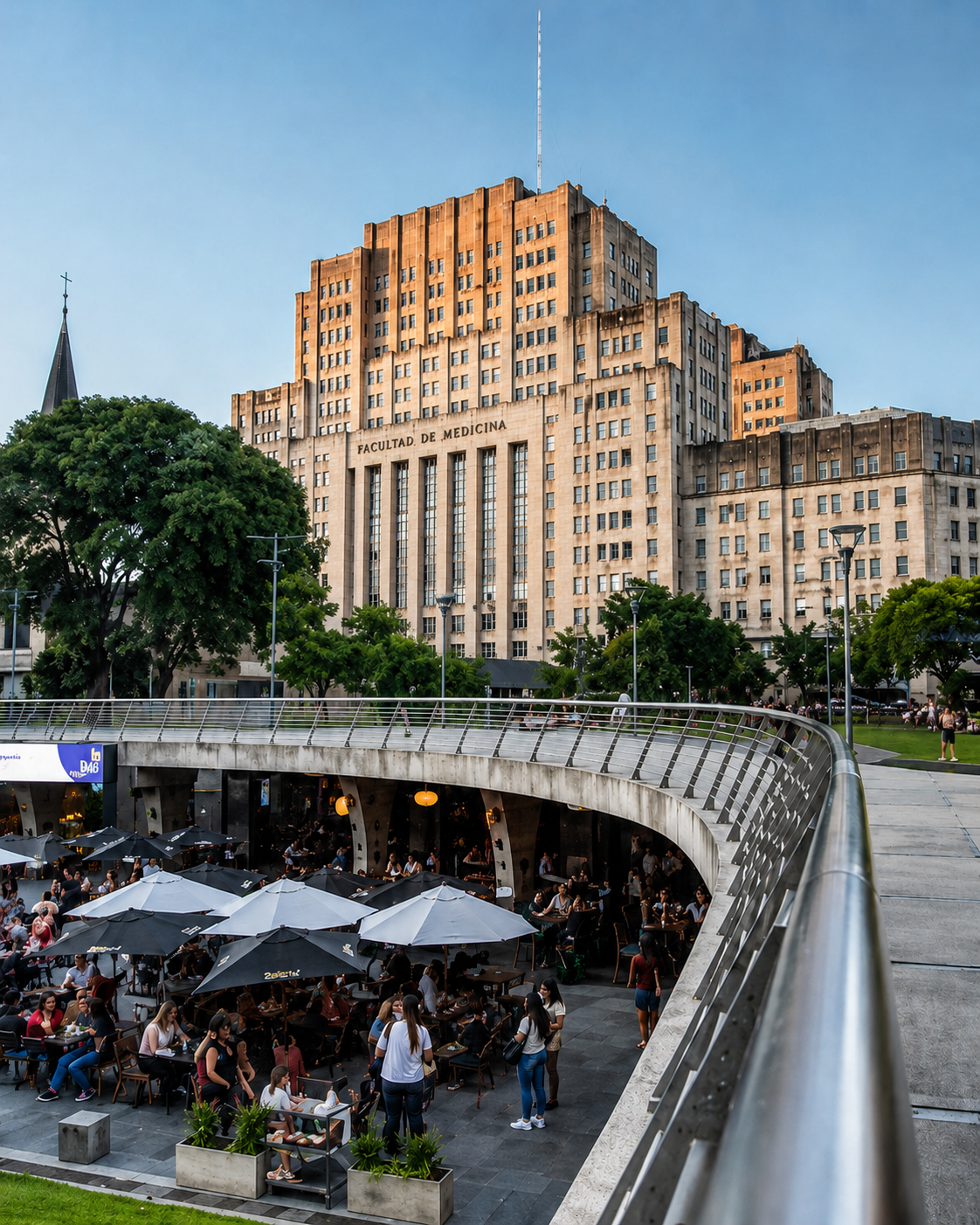
Iconic Buenos Aires cityscape blending grand academic architecture with everyday street life
The Healthcare System

Argentina’s healthcare system offers a layered structure that allows students to observe medicine from multiple angles.
The country combines:

A large public sector grounded in universal access
A strong private healthcare network
Academic teaching hospitals
Specialized research centers

Students witness how physicians navigate complex clinical environments and diverse patient populations — developing a broader understanding of healthcare delivery.

Clinical Environment in Buenos Aires

Buenos Aires is one of the largest metropolitan areas in the Southern Hemisphere, with a dense network of public and private hospitals integrated into daily urban life. Here, medicine is not isolated from the city — it is embedded in it.
Students observe:

High patient volume Socioeconomic diversity Strong bedside culture Clinical-academic integration

Clinical learning happens in real-world settings, not controlled environments.

Feel Like a Local — Not a Visitor

LATIDOS is designed so students do not experience Argentina as tourists. They move through the city the way local students and physicians do — commuting to hospitals, engaging with neighborhoods, navigating daily life in Spanish.

Students are encouraged to:

Live in residential areas
Use public transportation
Explore local public spaces
Participate in local cultural activities

The goal is not simply to visit Argentina. It is to understand how medicine is practiced within its social fabric. Feeling like a local fosters:

Broader cultural awareness in medical practices
Clinical adaptability within diverse hospital settings
Maturity and confidence in unfamiliar environments
Deeper analytical reflection on healthcare systems
Why This Matters

Medicine is shaped by culture, economics and history. Observing healthcare while living within a different society provides perspective that cannot be replicated in a classroom. Argentina offers academic seriousness, clinical depth and a human context that expands how students understand medicine.

This is not about travel. It is about perspective.

General Information

Frequently Asked Questions

Everything you need to know about the LATIDOS experience.